About Aquatic Resource Trade in Species
Fish and other aquatic resources are increasingly globalized, with trade doubling in recent decades. Trade therefore sits at the center of many pressing questions around aquatic resource sustainability, role in nutrition security, and contribution to wellbeing. However, our collective understanding of the environmental and human outcomes of aquatic resource globalization is limited by a fundamental gap between production and trade data. Capture fishery and aquaculture production are reported as species (e.g., Salmo salar) in terms of live weights while trade is reported as commodities (e.g., canned salmon) in terms of product weight. Converting commodity trade to species trade is complicated by the fact that a single species can contribute to multiple commodities (e.g. Salmo salar can become whole frozen salmon or salmon fillets), a single commodity can be made up of multiple species (e.g. salmon fillets can be made from Salmo salar or Oncorhynchus tshawytscha), and an imported commodity can be processed and exported again (e.g. whole frozen salmon processed into salmon fillets). Calculating apparent consumption then requires summing all capture and aquaculture production, adding production to imports and subtracting exports, after converting the hundreds of traded seafood products into effective live capture weights. As a result, we currently have only a coarse understanding of the geographical origin or production method (wild or farmed) of global aquatic resources.
The Aquatic Resource Trade in Species (ARTIS) database overcomes historical data challenges by taking a mass balance approach to solve for each country’s conversion of wild and farmed production into commodities, the conversion of imported commodities through processing, and apparent consumption. We then connect these estimates to bilateral trade data to disaggregate trade into species/species group trade flows. The resulting database includes annual species/species group trade for all countries going back to 1996 and indicates the likely production method and habitat based on reported production data.
The resulting ARTIS database consists of over 2400 species/species groups, 193 countries, and over 35 million bilateral records. ARTIS includes two primary data products: 1) taxonomically disaggregated trade data that distinguishes domestic- and foreign-sourced exports and indicates the source country and 2) estimated domestic and foreign apparent consumption by species/species group, habitat, production method, source country, and exporting country. We additionally provide tables with aligned production data, taxa information, and more.
While ARTIS offers novel insights into the global flow of aquatic resources, the estimates depend upon both the reported data and the underlying model. It is important to understand the model assumptions when interpreting the data. Please visit the ARTIS manual for detailed technical information and descriptions of the available data products.
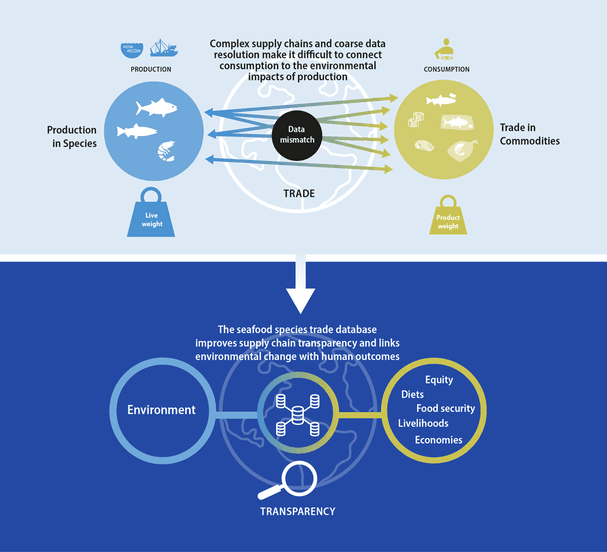
The development of the ARTIS database has been financially supported by the National Science Foundation (HNDS-I # 2504715), Oceana, Seafood Watch, the Environmental Defense Fund, and the John and Katie Hansen Family Foundation.
ARTIS Team
Primary Investigators

Jessica Gephart
Jessica Gephart is an Associate Professor in the School of Aquatic and Fishery Sciences at the University of Washington. Her research focuses on the intersection of seafood globalization and environmental change, evaluating how seafood trade drives distant environmental impacts, as well as how environmental shocks disrupt seafood trade. Her work brings together global trade data, local consumption data, and environmental impact data to understand the opportunities and risks of seafood globalization for sustainable production and food security. Dr. Gephart received her PhD in Environmental Science from the University of Virginia and completed a postdoctoral fellowship at the National Socio-Environmental Synthesis Center.

Christopher Golden
Chris Golden is an Associate Professor of Nutrition and Planetary Health at the Harvard T.H. Chan School of Public Health. With a background in ecology and epidemiology, he studies the human health impacts of environmental change. Golden is the founder and director of Madagascar Health and Environmental Research (MAHERY), a 501(c)3 focused on the training and capacity building of scientists in Madagascar, a country he has worked in since 1999.
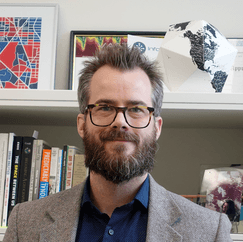
Alex Godwin
Alex Godwin is an Associate Professor in Computer Science at American University. He received his PhD in Human-Centered Computing from the Georgia Institute of Technology. His primary area of research is Information Visualization, with a focus on methods for displaying and interacting with geographic data. His lab at American University, the Digital Cities lab, develops systems for civic data collection and analysis. His students specialize in web visualizations and systems that incorporate tangible and tactile interfaces.
Postdoctoral Scholars & Staff
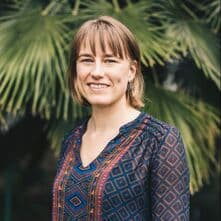
Althea Marks
Althea is a data scientist whose professional origins are rooted in environmental science, water quality, fisheries, marine ecology, and field work. She completed her Master’s research at California State University Fullerton investigating the in situ water filtration functions of native Olympia oyster habitat and Pacific oyster aquaculture. During this research she was inspired by the vast potential and value of data management, reproducible workflows, and open-science. In 2022 she was a Data Science Fellow at the National Center for Ecological Analysis and Synthesis (NCEAS) where she honed her expertise in Findability, Accessibility, Interoperability, and Reuse (FAIR) of digital assets. When she isn’t tinkering on the computer she may be in the mountains exploring via various modes of human powered transportation.
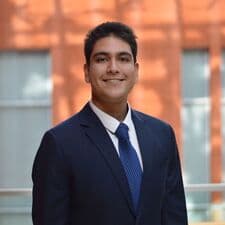
Rahul Agrawal Bejarano
Rahul Agrawal Bejarano is a data scientist at the University of Michigan and was formerly a data scientist in the Seafood Globalization Lab. During his time at the University of Michigan he received a BSE in Computer Science and Engineering and a MS in Environment and Sustainability. Past work includes making data analytics and programming more accessible in the fields of Ecology, Urban Development, Energy Equity, and Computer Science Education.

Jessica Zamborain Mason
Jessica Zamborain Mason is an interdisciplinary marine scientist who uses quantitative methods to increase our understanding of human-environment interactions, the performance of natural resources, and inform resource management and policy. Jessica’s current research takes a nutritional lens to fisheries, integrating nutritional outcomes into fisheries reference points and examining the consequences of climate change, human use, and trade on natural resources, human nutrition and public health. Overall, she aims to improve our understanding on nutrition-sensitive approaches to fisheries management and policy.

Whitney Friedman
Whitney Friedman is an interdisciplinary marine scientist working to inform effective and equitable management and conservation of marine resources. She completed her PhD at UC San Diego and Postdoctoral research at the National Center for Ecological Synthesis and Analysis (NCEAS, USCB), NOAA Fisheries, and UC Santa Cruz. Whitney works with diverse teams to design and conduct quantitative and qualitative analyses of marine social-ecological systems, addressing questions relating to climate resilience, nutritional security, global trade, and community-based management of marine resources. She is also a co-founder of Thriving Oceans Collective.